
Quick Summary
Straightening a sagging gate requires accurately diagnosing whether the misalignment stems from worn hinge hardware, frame racking, or structural post deflection before attempting any adjustments. While light wood or vinyl frames can often be squared with adjustable hinges or turnbuckle tension kits, Ironworks Gate Co. highlights that heavy iron gates, cracked welds, and shifting footings require qualified professional structural repair. After reading, you will understand how to safely troubleshoot minor gate sag and recognize when to schedule an on-site assessment for professional gate restoration.
Guide to Straightening a Sagging Gate
Safety Warning: Always support the full weight of your gate before loosening any bolts, hinges, or brackets. Qualified professional assessment is recommended for heavy, automated, welded, or structurally damaged gates. The procedures below are practical guidance and should not be treated as universally safe or authoritative methods for every installation; always verify steps against the gate and hardware manufacturer’s instructions.
When evaluating a sagging gate, the first step is identifying where movement or distortion is occurring. Possible causes of gate sag include hinge, framing, post, bracing, material, or hardware problems, though this does not represent a complete authoritative cause list. Minor latch alignment issues on light frames can often be resolved with basic adjustments, but heavy metal and ornamental gates require qualified professional assessment of frame joints, hinges, and footings. Note that relevant building code updates – such as approved proposals for the 2027 International Codes and California discussion drafts, which are not current mandatory requirements – address maintaining positive stops, fall protection, and latch keepers. Unless specifically cited, all instructions in this guide represent practical guidance rather than research-verified findings and require verification against manufacturer specifications.[2]
Quick Fix Summary
Practical Guidance: To address a sagging gate, support the latch-side corner to relieve weight from the hinges. Inspect the hinge assembly, mounting fasteners, and post for play, wear, or leaning. For frame sag on lighter gates, practical measures may include adjusting hardware or installing a diagonal anti-sag turnbuckle cable. For heavy, automated, or welded iron gates, obtain a qualified professional assessment. If a support post has shifted out of plumb, the post and footing may require professional evaluation and repair.
Key Steps at a Glance
- Support the weight: Support the latch-side corner before loosening any hardware.
- Find the failure point: Check for loose fasteners, worn hinge components, damaged joints, or a leaning post.
- Realign the frame: Adjust hinge hardware or tension bracing in accordance with manufacturer instructions.
- Check post plumb: If the post deflects or leans, arrange for qualified inspection of the post and footing.
When DIY Works vs. When You Need a Pro
Adjusting a light wooden or vinyl gate is often a manageable DIY task using a turnbuckle kit or adjustable hinges to help square the frame. As noted by Ironworks Gate Co., heavy, welded, or automated metal gates present greater complexity and safety risks, and qualified professional assessment is recommended. According to Los Alamos National Laboratory (LANL) Master Specifications (Section 32 31 00), non-lift-off hinges should be adequately sized for the gate and have a sufficiently large bearing surface so they do not twist or turn during operation. Other instructions and recommendations in this section represent general practical guidance rather than research-verified findings.[1]
| Issue Type | DIY Feasibility | Recommended Solution |
|---|---|---|
| Light Frame Racking (Wood/Vinyl) | Yes | Diagonal turnbuckle cable or corner braces per manufacturer instructions |
| Adjustable Hinge Play | Yes (Light Gates) | Realign nuts and tighten mounting hardware per manufacturer guidance |
| Hinge Fatigue or Cracked Welds | No (Pro Required) | Qualified professional repair or hinge replacement |
| Post Footing Deflection | No (Pro Required) | Professional evaluation and structural footing repair |
What You Need Before Straightening a Sagging Gate
Practical Guidance: Before loosening hardware, ensure you have appropriate tools and safety equipment suitable for the gate’s size and weight. Verify all tool ratings and procedures against manufacturer recommendations.
Tools and Hardware Checklist
- Appropriate lifting support and solid blocking
- Level
- Wrenches and socket set appropriate for your hardware
- Penetrating fluid for corroded fasteners
- Clamping tools
- Manufacturer-approved replacement hardware
- Turnbuckle and cable tension kit (for light wood or vinyl frames)
Safety Precautions for Heavy Metal and Automatic Gates
Automated gates present pinch, crush, and electrical hazards. Before inspection or maintenance, disconnect power sources and disengage drive mechanisms strictly according to the operator manufacturer’s safety manual. Resetting operator travel limits and servicing automated systems should be performed following manufacturer instructions or by a qualified technician.
Step 1: Diagnose Hinge Fatigue vs. Post Deflection
Practical Guidance: Determine whether the sag is originating from hinge wear, framing distortion, or post movement before attempting adjustments.
Checking Hinge Play and Joint Integrity
Examine the top hinge and frame connections while gently checking the latch side for movement. Look for:
- Gaps or excessive play between the hinge pin and barrel.
- Cracking along joints or mounting plates.
- Loose or wallowed-out fastener holes on posts and frames.
Testing the Gate Post for Plumb Under Load
- Place a level against the hinge post with the gate closed.
- Open the gate and check the level again.
- Observe whether the post deflects or leans when supporting the open leaf.
If the post leans or the foundation shifts, adjusting hinges alone will not provide a lasting repair.
Step 2: Relieve Tension and Support the Gate Corner
Need how to straighten a sagging gate?
We’re available now - call for a fast, free estimate.
Never loosen hinge hardware while the gate hangs unsupported under its own weight, as this can cause sudden shifting or injury. Provide secure, stable support under the latch-side corner before servicing hardware.
Lifting the Latch Side Safely
Practical Guidance: Support the latch-side corner using appropriate lifting gear and protective padding between the support and the frame until the gate is level and aligned with the latch receiver. Ensure the method chosen is safe for the specific gate weight and configuration.
Securing Temporary Shims
Once the gate is at the desired height, place solid blocking underneath the frame to ensure a stable mechanical rest while working.
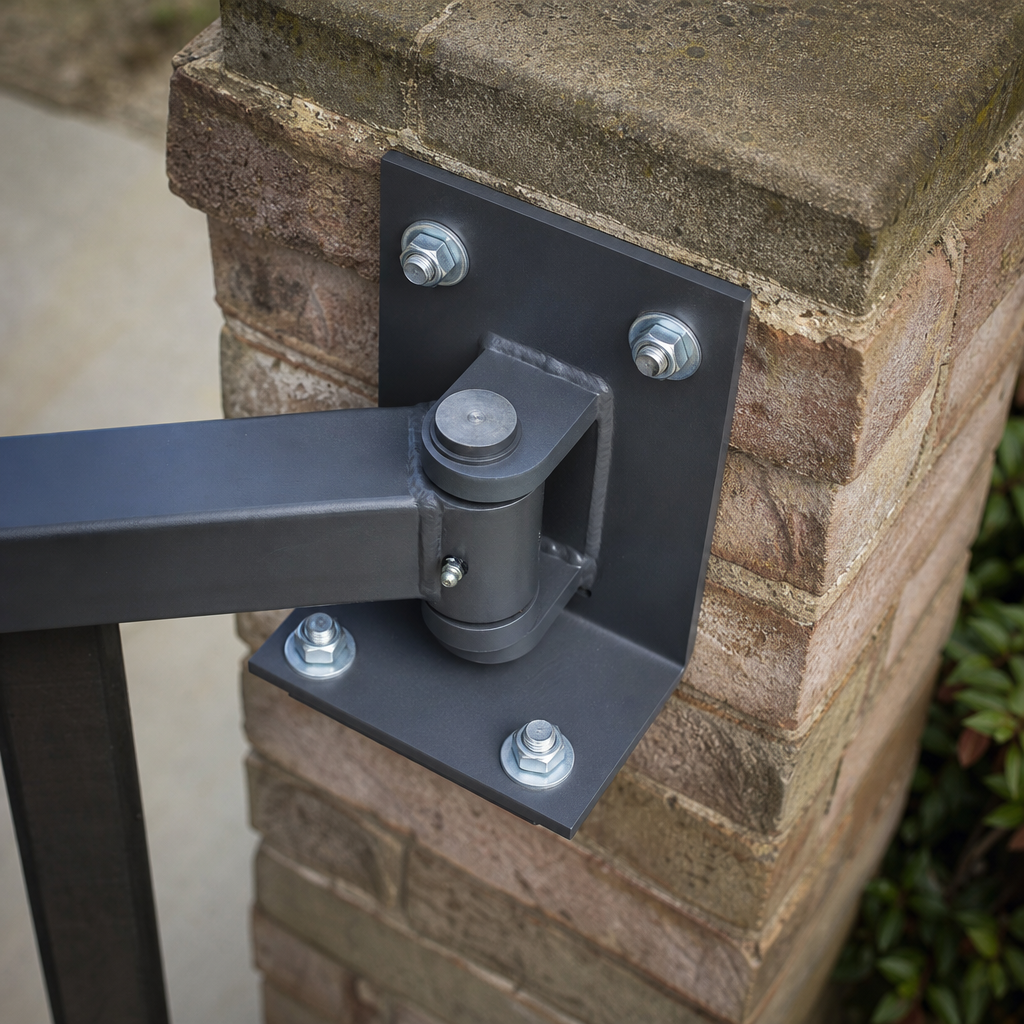
Step 3: Adjust or Replace Worn Gate Hinges
Practical Guidance: If inspection indicates hinge movement rather than a leaning post, adjusting or replacing hardware may help realign the leaf.[3]
Adjusting Threaded Hinges
For gates equipped with adjustable threaded hinge hardware, consult the hardware manufacturer’s instructions to adjust the positioning nuts on the upper and lower hinges to bring the frame back into alignment, then tighten all locking nuts securely.
Upgrading Worn Hinges
When hinge components are damaged or worn out, replacement is necessary. In line with Los Alamos National Laboratory specifications, non-lift-off hinges should be adequately sized for the gate and feature a sufficiently large bearing surface so they do not twist or turn during operation. Heavy, welded, or ornamental gates should be referred to a qualified professional such as Ironworks Gate Co.
Step 4: Install a Diagonal Tension Cable or Anti-Sag Kit
Practical Guidance: On wood, vinyl, or light frames, sag often results from frame racking. A diagonal tension cable kit can help pull the frame back square when installed according to manufacturer instructions.
- Support the latch corner so the frame is squared.
- Mount the upper bracket near the top corner on the hinge side.
- Mount the lower bracket near the bottom corner on the latch side.
- Connect the cable and turnbuckle assembly per manufacturer directions.
- Adjust turnbuckle tension until the frame is supported square, then test alignment.
Note: Tension cable kits are generally intended for light wood or vinyl gates and are not suitable for heavy metal gates.
Step 5: Re-Plumb the Post and Structural Repairs
When support posts lean, footings fail, or welded joints crack, simple hardware adjustments are insufficient. Detailed structural repairs, foundation work, and welding on heavy or metal gates should be evaluated and performed by qualified professionals.
Components Associated with Gate Alignment Issues
Need how to straighten a sagging gate?
We’re available now - call for a fast, free estimate.
Practical Guidance: On various gate styles, several interconnected parts can contribute to sag or binding:
Hinges and Pivot Hardware
Wear or lack of lubrication in pivot points can lead to vertical drop and latch misalignment over time.
Operator Arms and Mounting Brackets
On automated entries, misaligned or loose operator brackets can cause binding or uneven movement during transit.
Gate Wheels, Rollers, and Ground Tracks
For sliding and rolling gates, ground scraping is commonly associated with worn rollers, debris in tracks, or misaligned guide hardware.
Automated Gate Considerations
Practical Guidance: Gate misalignment can cause automated openers to bind, increasing mechanical resistance. Consult manufacturer documentation or a qualified technician to address binding, adjust travel limits, and ensure access control hardware aligns properly without overloading drive components.
Gate Repair vs. Replacement Considerations
Practical Guidance: Deciding between repair and replacement depends on the structural integrity of the frame, posts, and foundation.
When to Consider Repair
- The support post is plumb and solidly set.
- The frame is structurally sound, with sag limited to adjustable hardware or minor frame racking.
- Fasteners or hinges can be safely replaced per manufacturer guidelines.
When to Consider Professional Replacement
- Structural members have suffered extensive corrosion or severe damage.
- Support posts or footings are inadequate for the gate leaf size and weight.
- Welds or structural joints have failed across critical load points.
Frequently Asked Questions About Sagging Gate Repair
Why is my gate sagging even with an auxiliary wheel installed?
Practical Guidance: Auxiliary or caster wheels may encounter uneven ground surfaces, potentially transferring stress back into the gate frame and hinges rather than providing uniform support. Professional assessment, such as that provided by Ironworks Gate Co., is recommended for heavy gate support solutions.
Can gate sag affect an automatic opener?
Practical Guidance: Yes. Alignment issues can cause binding and physical resistance, which may strain operator mechanisms, trigger obstacle sensors, or cause premature wear on drive components.
How do I know if my gate post requires professional structural repair?
Practical Guidance: If a level indicates that the post leans under load or if there is visible movement in the ground or footing, the post foundation may have shifted and should be evaluated by a professional.
How do I reset an electric gate opener after realignment?
Practical Guidance: Once the gate is aligned and moves freely by hand, refer to the opener manufacturer’s manual for specific instructions on recalibrating limit settings and safety features.
Need how to straighten a sagging gate?
We’re available now - call for a fast, free estimate.
Sources
- [PDF] section 02821 chain link fences and gates – engstandards.lanl.gov (2001)
- How to Fix a Sagging Gate with a Simple Diagonal Brace – youtube.com (2026)
- gatesafety.com › legislationGate Safety | TGM-500™ & TGM-501™ Standards – gatesafety.com (2025)
Related reading: Electric Gate Not Closing Fully – 10% Off & Free Estimate – Same-Day Service
Related reading: How to Fix Automatic Gate – Call Now-10% Off – Same-Day Service – Free Estimate
Related reading: Ironworks Gate Co Warranty | Call Now-10% Off | Same-Day Service | Free Estimate
Frequently Asked Questions
Why can't I use a turnbuckle anti-sag kit on a heavy wrought iron gate?
Turnbuckle cables and anti-sag kits are engineered exclusively for flexible wood or vinyl frames and cannot withstand the structural tension of rigid metal assemblies. Attempting to force a metal frame square with surface cables can bend decorative pickets or cause mounting hardware failure, which is why Ironworks Gate Co. uses heavy-duty hinge adjustments and structural re-welding to restore iron gates.
How do professionals fix a gate post that has shifted out of plumb in the ground?
When a support post leans under load, technicians must fully support and detach the gate leaf before excavating around the compromised foundation. Ironworks Gate Co. realigns shifting posts by re-plumbing the steel column and pouring deeper, reinforced concrete footings capable of handling the cantilevered weight of the gate.
What should I do if an automatic gate opener continues to bind after the frame is straightened?
Persistent binding typically means the operator mounting brackets became warped or the internal limit switches drifted out of sync while the motor struggled against the sagging leaf. Disengage the manual release to prevent motor burnout, then schedule a professional service assessment with Ironworks Gate Co. to realign the actuator arm and recalibrate travel safety limits.
About the author
 |
Sarah Miller Sarah Miller is a specialized content creator with a focus on property security and access control systems. Drawing from her five years of experience writing for the home services sector, she provides homeowners and property managers with clear, actionable insights on gate maintenance, repair processes, and transparent pricing. Sarah holds a Bachelor of Arts in Communications from California State University, Fullerton. |
Gate not opening, off track, or opener dead?
We’re available now - call for a fast, free estimate.
Call Now - Free Estimate