
Last updated August 25, 2026
Free on-site gate assessment - hinges, posts, and your LiftMaster or Nice gate operator checked before anything is quoted
The assessment is free and the quote is the invoice.
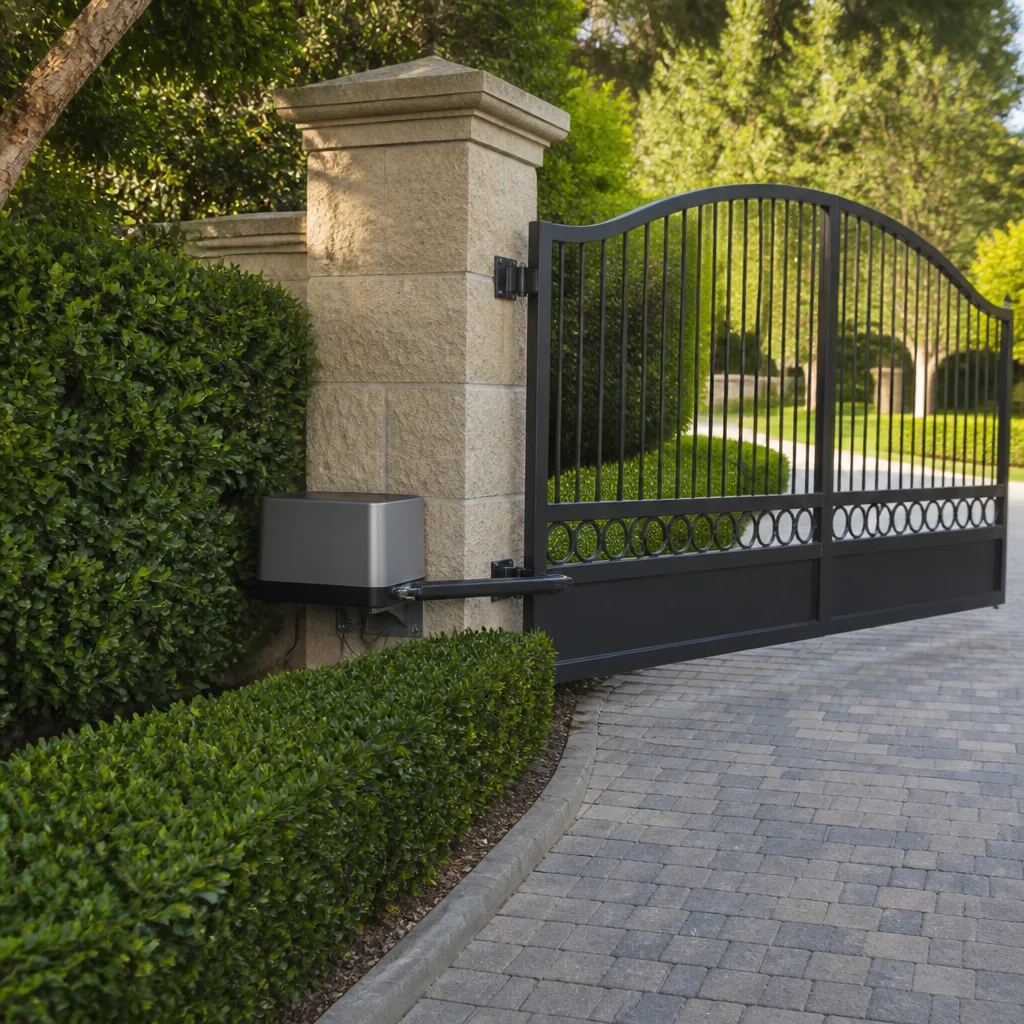
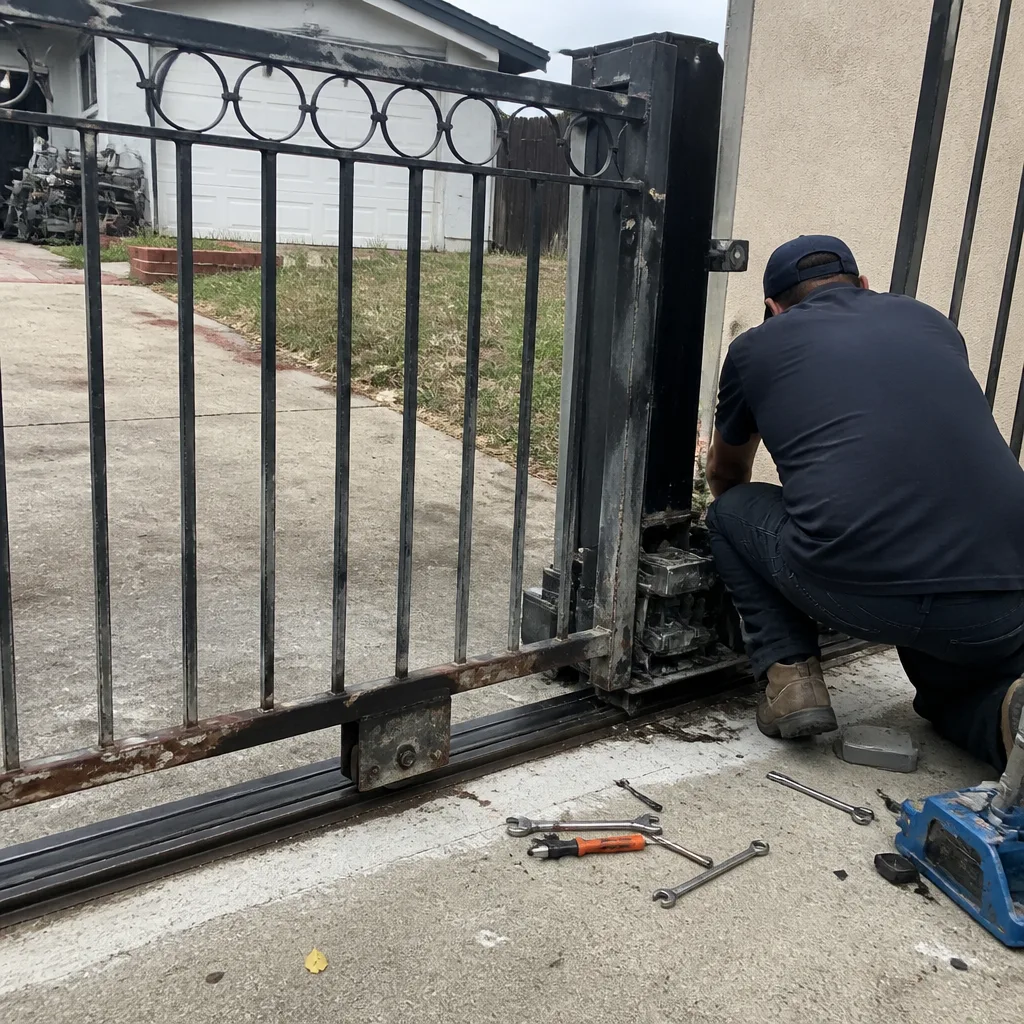 Before
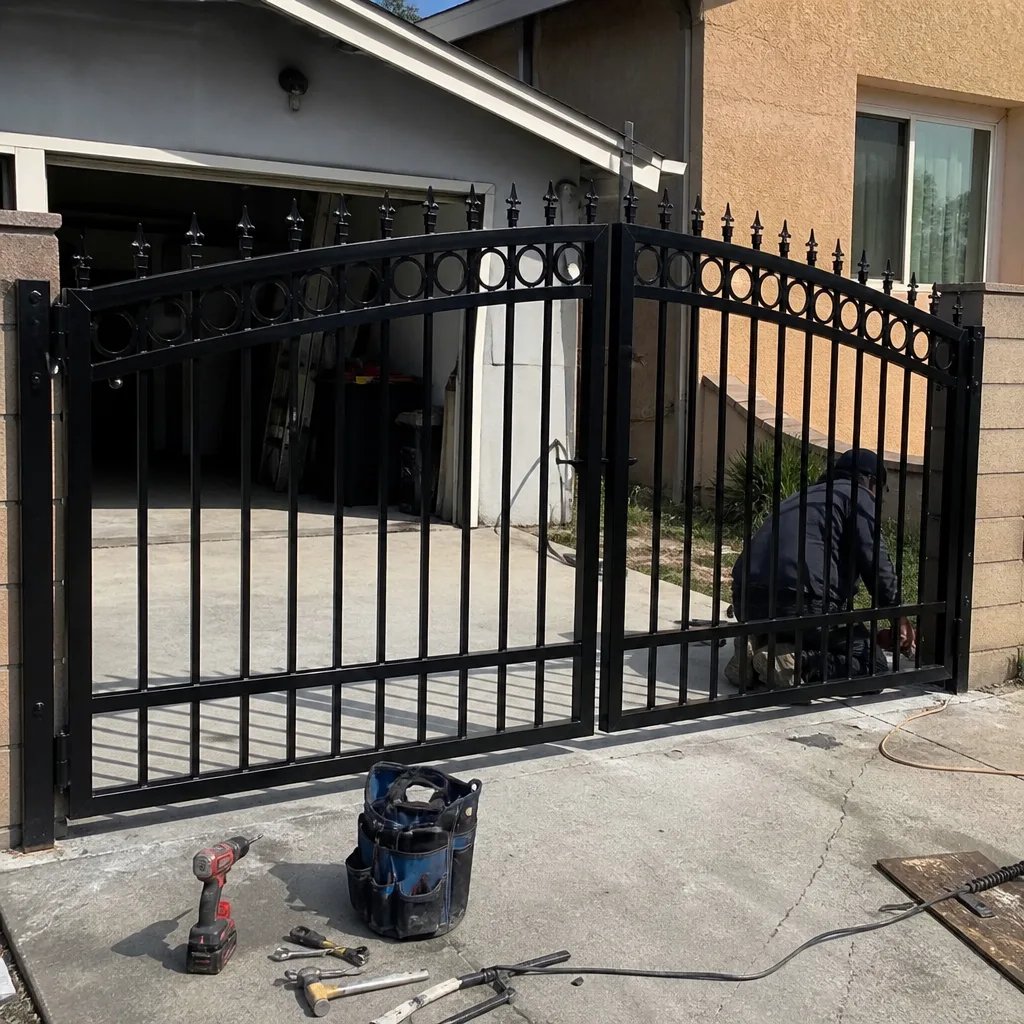 After
After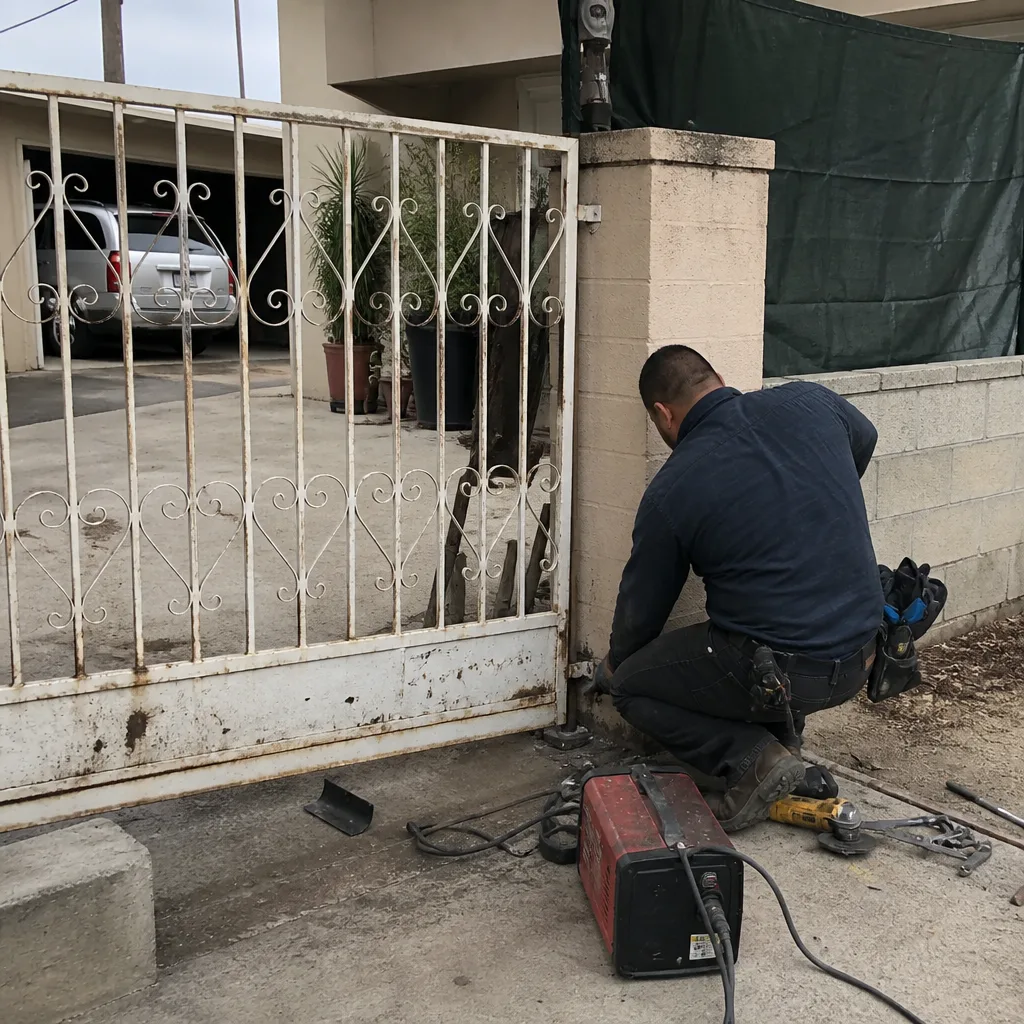 Before
 After
After Before
 After
AfterSeasonal Gate Repair Care for Bell Gardens: Year-Round Homeowner’s Guide
Most homeowners in Bell Gardens don’t think about their gate until the day it refuses to open. That’s the expensive way to own a gate. A driveway gate is a machine built from steel, electronics, and moving parts, and every one of those parts responds differently to heat, rain, and time. The homeowners who get twenty years out of a gate are the ones who spend ten minutes on it four times a year. This guide covers what Bell Gardens weather actually does to gate hardware, what to check each season, what costs look like when something fails, and when to call for help before a nuisance becomes a bill.
Quick Answer
Seasonal gate care in Bell Gardens means checking hinges, welds, electronics, and safety sensors four times a year, paying closest attention to summer heat expansion and winter rain corrosion. Most seasonal tune-up work takes under an hour and costs $89 in this area. A gate that gets seasonal attention lasts roughly twice as long as one that gets fixed only after it fails.
Table of Contents
- Why Bell Gardens Weather Is Hard on Gates
- Spring Gate Care: Rain Recovery and Sensor Checks
- Summer Gate Care: Heat, Sag, and Chain Tension
- Fall Gate Care: Winds, Debris, and Leaf Guards
- Winter Gate Care: Moisture, Motors, and Cold Starts
- What Seasonal Gate Repair Costs in Bell Gardens
- What a Homeowner Can Safely Do vs. What Needs a Pro
- Common Mistakes to Avoid
- When to Call a Professional
- Frequently Asked Questions
Why Bell Gardens Weather Is Hard on Gates
Bell Gardens sits in the San Gabriel Valley corridor, where summer temperatures routinely cross 90 degrees and winter nights drop into the low 40s. That swing is harder on gate hardware than either extreme alone. Steel expands in heat and contracts in cold. A powder-coated gate panel that fits perfectly in January is measurably larger on an August afternoon. That is not theory. We see it in the field every summer, usually as a gate that scrapes a post or binds at the latch during the hottest hours of the day, then miraculously behaves again after sunset.
The second factor is moisture, and Bell Gardens gets more of it than people expect. Winter rain, morning marine-layer condensation, and proximity to the Los Angeles River all contribute. Uncoated steel, cheap hinges, and exposed circuit boards absorb that moisture and break down faster here than they would in, say, Palm Springs. The third factor is the oldest one: age. Many homes in Bell Gardens were built between the 1940s and 1970s, which means a meaningful number of driveway gates are original to the property or installed during a remodel twenty or thirty years ago. Old tubular steel gates rust from the inside out. Old opener motors run on capacitors and limit switches that are past their designed lifespan.
None of this means a Bell Gardens gate is doomed to fail. It means the maintenance calendar has to match the local climate, not a generic guide written for a national audience.
Spring Gate Care: Rain Recovery and Sensor Checks
Spring in Bell Gardens is the season when winter’s damage becomes visible. The rain has stopped, the ground has dried, and any rust or electrical corrosion that accumulated between December and March is now showing itself. This is the most important service window of the year.
Here is the spring checklist we walk Bell Gardens homeowners through, in order of priority:
- Check the safety sensors. Photo-eye sensors at the base of the gate get dirty, misaligned, or water-damaged during winter rain. A gate that reverses for no reason, or refuses to close, usually has a sensor problem, not a motor problem.
- Inspect hinge welds and bolts. Winter moisture accelerates rust at connection points. Look for orange staining around bolt heads, hairline cracks in welds, and any looseness when the gate is pushed by hand in the released position.
- Test the release mechanism. Every automated gate has a manual release lever or key. If a Bell Gardens homeowner does not know where it is, now is the time to find out, because a power outage or motor failure without knowing the release point means a vehicle trapped in the driveway.
- Lubricate hinge pins and rollers. Use a dry silicone spray, not WD-40. WD-40 is a solvent and will wash out the existing grease. Silicone leaves a protective film that does not attract dirt.
- Clear drainage around the gate track. Slide gates in Bell Gardens collect leaves, mud, and debris in the track channel. A clogged track makes the motor work harder, which shortens its lifespan.
A homeowner can do items 1, 3, and 5 in a half hour. Items 2 and 4 are where most people want a second set of eyes, because a cracked weld is not always obvious to an untrained eye, and the wrong lubricant on the wrong component creates problems that show up months later.
Summer Gate Care: Heat, Sag, and Chain Tension
Summer is when gate hardware fails visibly and dramatically in Bell Gardens. The temperature inside a black steel gate panel on a 95-degree day can exceed 140 degrees. That heat does three things: it expands the metal, it thins out the grease on moving parts, and it pushes older electronic components past their thermal limits.
The most common summer failure we see is a gate that sags at the free end. Here is why it happens. A driveway gate is a cantilever: one end supported by hinges, the other end resting on a latch or riding on a wheel. As the steel heats and softens, and as the hinge bushings wear, the free end drops. A drop of half an inch changes the latch geometry enough that the gate no longer closes cleanly. The owner compensates by adjusting the latch or the limit switch, but that is treating the symptom. The fix is checking hinge torque and wheel height before the sag becomes permanent.
Chain-drive openers need attention in summer too. Heat makes chains expand, which makes them run loose. A loose chain slaps against the housing, wears the sprocket teeth, and eventually throws the chain entirely. The adjustment takes about fifteen minutes with a wrench, but it requires knowing the correct tension specification for the specific opener brand. Too tight is as damaging as too loose. We service Ghost Controls, DoorKing, Elite, and Mighty Mule equipment regularly in Bell Gardens, and each brand has different tension tolerances.
For homeowners, the summer checklist is shorter than spring but no less important:
- Listen for new sounds: scraping, grinding, slapping, buzzing. New sounds mean new problems.
- Push the gate manually once a month, with the opener released, to feel for resistance.
- Check that the gate closes fully and the latch actually engages. A gate that closes ninety-five percent of the way is not closed.
- Shade exposed opener boxes if the afternoon sun hits them directly. A simple sun shield extends electronic component life measurably.
Fall Gate Care: Winds, Debris, and Leaf Guards
Fall in Bell Gardens brings the Santa Ana winds, and wind is the most underrated enemy of gate hardware. A solid-panel driveway gate in a 40-mph gust acts like a sail. Every square foot of panel surface catches wind and transfers that force directly into the hinges, the track, and the opener’s gearbox. Gates that have survived for years suddenly develop hinge play or track wear after a single windy October, because the wind found the weak point that normal operation never stressed.
The fall checklist for Bell Gardens homeowners:
- Clear debris from the track and the hinge pockets. Eucalyptus leaves, palm fronds, and wind-blown trash all find their way into gate mechanisms. Debris in a track causes the gate to shudder, which loosens bolts.
- Check that all bolts are snug. Wind vibration works bolts loose gradually. A half-turn with a wrench now saves a sheared bolt later. Focus on the hinge bolts, the track anchors, and the opener mounting bracket.
- Inspect the gate wheels or rollers. Flat spots, wobble, or cracked rubber mean the wheel is done. A bad wheel drags, and drag shortens opener life.
- Test the auto-reverse function. The opener should reverse when it encounters resistance. This is a safety feature, not a convenience. In California, gate safety standards require entrapment protection, and fall is a reasonable time to verify it still works.
- Look at the control box seal. The gasket that keeps dust and moisture out of the opener’s circuit board degrades over time. A cracked or stiff gasket needs replacement before winter rains arrive.
Fall is also the season for the $89 Seasonal Tune-Up that many Bell Gardens homeowners schedule before the holiday season. It covers the full checklist, plus chain or belt tension adjustment and a limit switch calibration. It is the lowest-cost insurance a gate owner can buy.
Winter Gate Care: Moisture, Motors, and Cold Starts
Winter in Bell Gardens is mild compared to most of the country, but damp cold creates specific problems. The nightly marine layer, combined with winter rain, means exterior metal spends hours each day covered in condensation. That condensation works into hinge pins, motor housings, and control boards.
The failure pattern is predictable. An opener that worked fine in October sits unused for a few cold, wet December mornings. When the homeowner presses the remote, the motor hums but does not turn, or the gate starts and stalls halfway. The cause is usually one of three things: a cold battery in a solar-powered opener, water intrusion in a control board, or a capacitor that has degraded to the point where it can no longer provide the starting torque in cold weather. None of these are catastrophic, but all three require diagnosis with a multimeter and, often, bench repair or replacement parts.
For homeowners, winter care is mostly about prevention and awareness:
- Check battery voltage on solar and backup systems. Solar opener batteries lose capacity in cold, overcast conditions. A battery that is fine in July may be marginal in January.
- Keep the control box dry. Look for standing water near the opener post, condensation inside the box, or corrosion on terminals.
- Test the gate after every rain event. A short circuit caused by water intrusion often shows up within 24 hours of the rain, not during it.
- Listen for slow starts. A motor that labors to get the gate moving on a cold morning is telling you something.
One more winter note: Bell Gardens occasionally sees overnight temperatures near freezing. Frozen moisture in a hinge or track can make a gate stick. Do not force it. A gate that resists opening should be released manually and inspected, not powered through, because forcing it can strip gears or bend the rack.
What Seasonal Gate Repair Costs in Bell Gardens
Here is what homeowners in Bell Gardens should expect to pay for common seasonal gate repairs, based on the work we do in this area. These are 2025-2026 market ranges, not national averages. Prices reflect local labor rates and parts availability in the Los Angeles metro area.
| Repair or Service | Typical Bell Gardens Cost Range | Time on Site |
|---|---|---|
| Seasonal tune-up (full checklist) | $89 flat | 60-90 minutes |
| Hinge replacement (steel, welded) | $220-$380 per pair | 1-2 hours |
| Wheel or roller replacement | $85-$160 per wheel | 30-60 minutes |
| Chain or belt tension adjustment | $75-$140 | 20-40 minutes |
| Safety sensor replacement | $120-$220 | 45-90 minutes |
| Control board repair or replacement | $250-$600 | 1-2 hours |
| Weld repair (crack or separation) | $150-$350 per repair | 1-3 hours |
| Full opener replacement (installed) | $900-$2,400 | Half day |
These ranges assume standard residential equipment. Larger estate gates, custom ironwork, or long slide tracks will run higher. The price is always quoted and agreed before any work begins. That is not a courtesy. It is the way the job works. A homeowner should never approve gate work without a written number attached to it.
Two standing offers apply to most repair situations: $50 off any repair over $250, and a permanent 5 percent discount for seniors and veterans. Both are honored on every qualifying job, no negotiation required.
What a Homeowner Can Safely Do vs. What Needs a Pro
There is a clear line between homeowner maintenance and professional repair, and it is drawn by safety, not by skill. Here is where the line sits.
Safe for a homeowner:
- Clearing leaves, debris, and trash from the track
- Wiping down photo-eye sensors
- Visual inspection of welds, bolts, and wheels
- Testing the auto-reverse function
- Lubricating hinge pins with dry silicone spray
- Finding and testing the manual release mechanism
Should be left to a trained technician:
- Any work involving high-tension garage springs or gate springs. These are under enormous stored energy, and a spring under tension that releases unexpectedly can cause severe injury. Even experienced technicians treat these with respect.
- Welding. A gate weld that fails at the wrong moment becomes a multi-hundred-pound falling object.
- Opener motor diagnostics and circuit board work. 120-volt and 240-volt circuits are involved. The wrong move shorts the board, and the right move still requires knowing what the board expects.
- Gate geometry: sag correction, hinge re-setting, and track re-alignment. These are not adjustments. They are structural corrections, and they require measurement and judgment.
- Any repair where the gate is the only barrier protecting a pool. California pool safety codes are strict, and a gate that does not self-close and self-latch properly is a code violation and a genuine hazard.
The honest truth is that most seasonal maintenance takes less time than most homeowners expect, and the portion that requires professional tools is usually quick work for someone who does it daily. The $89 tune-up exists because the inspection is the product. The adjustments are easy. Knowing what to look for is the skill.
Common Mistakes to Avoid
- Lubricating with WD-40. It displaces moisture, which sounds good, but it also strips the existing grease and leaves metal dry. Dry metal wears fast. Use dry silicone on hinges and rollers.
- Tightening the chain until it is banjo-string tight. An over-tightened chain puts side load on the motor bearings and the sprocket shaft. The chain should have a small amount of deflection, not zero. Different opener brands have different specs, and the correct tension for a DoorKing is not the correct tension for a Mighty Mule.
- Adjusting the limit switches to fix a sagging gate. If the gate is dropping at the free end, the problem is hinge wear or wheel height, not the travel limit. Adjusting the limit masks the sag for a few weeks, then the problem returns worse.
- Ignoring a new noise. Gates do not heal. A scrape, grind, or hum that was not there last month is a component telling you it is failing. The repair is almost always cheaper before the part fully lets go.
- Covering the control box with plastic to protect it from rain. Plastic traps condensation inside, which is worse than rain. The box is designed to shed water. If the gasket is compromised, replace the gasket.
- Waiting until the gate completely stops working to call. By the time a gate will not open, the failure has usually progressed through several warning stages. Each earlier stage was a smaller, cheaper fix.
- Bypassing the safety sensors because they are “annoying.” The sensors are not an optional feature. They are an entrapment-protection requirement, and disabling them creates real liability and real danger, especially in homes with children or pets.
When to Call a Professional
Call a gate professional when the gate sags visibly, when the opener labors or stalls, when you see cracked welds or rust through the metal, when the safety sensors will not stay aligned, or when the gate has made contact with a vehicle or a person. These are all structural or electrical situations where guessing wrong is expensive and, in the case of large moving panels, genuinely dangerous.
Call a professional also when you simply do not want to spend your Saturday underneath a gate. That is a legitimate reason. Ironworks Gate Co. home service area covers all of Bell Gardens, and we offer free estimates on repair work. Call (213) 497-0081 and a live person answers, any hour.
Frequently Asked Questions
A full seasonal tune-up in Bell Gardens costs $89 flat through Ironworks Gate Co., covering hinge inspection, chain or belt tension, limit switch calibration, sensor alignment, lubrication, and a written condition report. Most tune-ups take between 60 and 90 minutes. Call (213) 497-0081 to schedule one, and ask about the $50 off any repair over $250 if the inspection finds something that needs attention.
A driveway gate should be inspected and serviced at least twice a year, with four times per year recommended in Bell Gardens because of the combination of summer heat expansion and winter moisture. Homeowners who use their gate more than ten cycles per day, or who have solar-powered openers, should lean toward quarterly service.
Hot weather expands the steel, which tightens clearances between the gate and its track or posts, causing scraping and binding sounds. It also thins the lubricant, so metal-on-metal contact becomes audible. The fix is usually clearance adjustment and proper lubrication, not replacing the opener. If the noise persists through the evening, schedule an inspection before the wear becomes structural.
Most repair calls in Bell Gardens are completed in a single visit, because the trucks carry the common parts: hinge sets, wheels, sensors, chains, belts, and control boards for the major opener brands. A live person answers the phone 24 hours a day at (213) 497-0081, and emergency gate work is available around the clock. A gate stuck open is a security problem, and a gate stuck closed is a fire-access problem. Both get treated as priorities.
Yes. The technician teams are trained and equipped on nine major opener brands, including Ghost Controls, DoorKing, Elite, and Mighty Mule, which covers the large majority of equipment installed in Bell Gardens. The correct fix is made on the first visit because the diagnosis is based on that brand’s actual specifications, not a generic assumption.
Bring it. Ironworks Gate Co. offers a free second opinion on any written estimate, which means a technician will inspect the gate and review the competing quote at no charge. If the work is the same, the price is often competitive. If the work is unnecessary, that will be said plainly. Call (213) 497-0081 to arrange a look.
The Bottom Line
Seasonal gate care in Bell Gardens is not complicated, but it is specific. The heat, the damp, and the wind each stress different parts of the system, and the maintenance calendar has to account for all three. A homeowner who spends thirty minutes per season on inspection will catch most problems at the hinge or the sensor, where fixes are cheap and quick. A homeowner who waits for the gate to fail will pay for motors, boards, and welding. The $89 tune-up is the cheapest relevant insurance in this market, and a gate that is maintained seasonally will outlast its neglected twin by a decade or more.
Written by Victor Salinas, Owner at Ironworks Gate Co., serving Bell Gardens since 2013.