
Quick Summary
When automated sliding driveway gates jump their tracks, grind, or stall mid-cycle, property owners face urgent security vulnerabilities and severe safety hazards caused by mechanical drag or electrical breakdown. As a premier local specialist, Ironworks Gate Co. provides rapid sliding gate repair by diagnosing bent V-tracks, seized roller bearings, and faulty operator systems in a single comprehensive visit. Readers will understand how to accurately troubleshoot common track, chain, and sensor failures and can call for 24/7 live dispatch or schedule a free on-site sliding gate assessment.
Sliding Gate Repair: How to Fix Common Failures Fast
When a heavy driveway gate stops halfway, grinds against the pavement, or jumps its track, getting it moving again safely is an immediate priority. A stuck gate leaves your vehicles trapped in a narrow driveway or leaves your entire property exposed. Many sliding gate repairs can be completed in a single visit, with costs generally running between $150 and $500 for physical track or roller issues, and up to about $1,200 for major replacement jobs. Addressing mechanical problems early helps prevent severe structural failures. Between 1990 and 2024, California OSHA recorded 47 accidents, 35 injuries, and 12 fatalities involving sliding gates. Depending on the installation, general maintenance workers may not always have the specialized welding equipment or specific training required for high-mass gate systems.[1]
Ironworks Gate Co. provides sliding gate repair services throughout Bell Gardens and surrounding Los Angeles County neighborhoods. Technicians arrive equipped to address bent V-tracks, worn bearings, chain drive issues, and operator wiring. With written estimates provided upfront, technicians service a wide range of common residential and commercial gate systems. Contact dispatch or book an on-site assessment below.[2] See also Gate Repair Bell Gardens | Call Now-10% Off | On-Site in 60 Minutes | Free Estimate.
Fast Sliding Gate Repair: Immediate Triage
In general field practice, when an automated sliding gate fails, the first step is separating a physical track bind from an electrical operator breakdown. In older installations with heavy wrought iron gates, concrete sub-grades may settle over time, causing the gate to drag. The motor may strain under the added mechanical load and shut down on thermal overload. What appears to be an operator failure is frequently physical rolling resistance.[4]
Common Symptoms in Field Practice
- Motor hums or buzzes with zero gate movement: Often indicates roller friction, concrete settling, or a start capacitor issue rather than a damaged motor gearbox.
- Gate stops mid-cycle and reverses: Frequently triggered by misaligned photo-eye sensors, excessive chain sag, or an obstructed track groove.
- Popping, screeching, or grinding sounds: Typically points to worn roller bearings, dry internal races, or misaligned drive sprockets.
When to Stop Operating the Gate Immediately
Technicians recommend turning off the power switch inside the motor housing immediately if the gate frame binds, leans out of plumb, or derails from the V-track. Continuing to cycle the operator can damage motor windings or cause the gate to come off its guide posts, creating a significant safety hazard. As noted in safety alerts from the Consumer Product Safety Commission (CPSC), older gate systems often lack adequate secondary safety devices, increasing entrapment and crushing risks.[3]
Diagnostic Tools for Sliding Gate Troubleshooting
As general guidance, isolating track resistance from motor torque typically involves a combination of mechanical alignment tools and electrical test instruments.
Common Diagnostic Tools
- Manual Release Key or Allen T-Wrench: Disengages the internal clutch or drive chain pin so the gate can be evaluated manually.
- 4-Foot Level and Steel Pry Bar: Used to check track grade, post plumb, and general foundation alignment along the run.
- Digital Multimeter: Measures input voltage, control board fuses, limit switch continuity, and capacitor microfarads.
- Mechanics Gloves and Safety Glasses: Protects against pinch points, drive sprockets, and tensioned chains.
Step 1: Inspect the V-Track and Concrete Sub-Grade Foundation
General practitioner guidance from Ironworks Gate Co. recommends beginning at ground level, as a sliding gate relies directly on the stability of the foundation beneath it.
Identifying Foundation Subsidence
Heavy gates place consistent downward pressure on concrete footings. Over time, ground settling near a driveway apron can cause sections of track to sink or shift. If the track drops even slightly, the bottom rail of the gate may contact high spots in the surface, creating friction that stalls the operator.
Clearing Debris and Checking Anchor Bolts
- Clear the length of the V-track with a stiff wire brush to remove packed dirt, gravel, and rust buildup.
- Inspect concrete wedge anchors for sheared heads, loose nuts, or damaged concrete around anchor points.
- Place a level along the track sections to identify uneven spots or twisted areas.
When addressing a bent or settled track, practitioners advise against heavy hammering that could warp the steel angle iron. Leveling and re-anchoring generally involves installing suitable expansion anchors into solid concrete and shimming the base as needed.
Step 2: Check Roller Bearings and Mechanical Friction Drag
Evaluating manual rolling resistance helps determine whether the underlying cause is mechanical drag or electrical failure.
General Guidance for Testing Rolling Resistance
- Locate the manual release on the operator housing, insert the key, and disengage the internal drive clutch (or release the chain bracket).
- Gently push the gate through its full travel path by hand.
- A properly aligned gate in good condition typically moves with moderate, steady effort. Significant resistance often indicates seized bearings, track obstructions, or grade contact.
Seized Sealed Bearings vs. Worn Wheel Grooves
Slide gate wheels typically use internal sealed bearings. Over time, moisture and particulate intrusion can compromise internal seals, causing the bearings to seize. As the gate is pulled along the track, worn wheels can develop flat spots that cause binding. Replacing worn rollers with appropriate tandem bearing assemblies generally restores smoother travel and reduces operator strain.
Step 3: General Diagnostic Guidance for Gate Openers, Limit Switches, and Relays
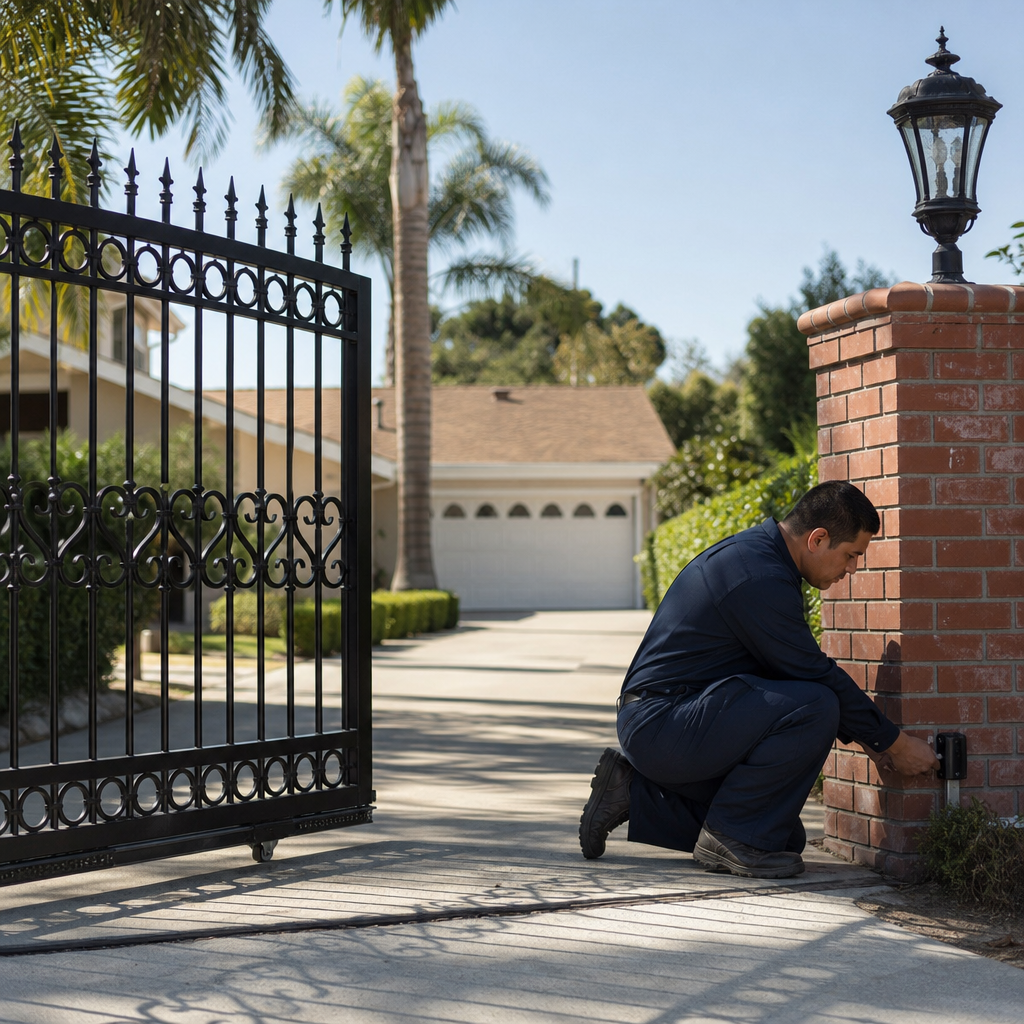
If the gate moves smoothly by hand across its span, troubleshooting generally shifts to the drive linkage, control board, or electrical supply.
Checking Drive Chain Tension and Sprockets
- Inspect Chain Sag: In standard practice, a drive chain typically maintains approximately 1 to 2 inches of deflection over a 10-foot span. Excessive sag may allow the chain to catch, while over-tightening places excess load on output shaft bearings.
- Inspect Sprocket Teeth: Check drive sprockets for worn, hooked, or chipped teeth that could cause the roller chain to slip or bind under load.
Testing Limit Switches and Circuit Relays
- Examine Travel Limit Nuts and Switches: Operators generally rely on limit cams or magnetic sensors to control travel limits. If a limit switch sticks or shifts, the motor may attempt to drive past its stops.
- Listen to the Control Board Relays: Activating the operator while observing the board can provide diagnostic clues. A click from the circuit board relay without motor rotation may suggest power is reaching the board while a capacitor, winding, or connection requires further testing.
Step 4: Test Photo-Eye Safety Sensors and UL 325 Entrapment Devices
An automated sliding gate that begins to close and then immediately reverses is frequently responding to a safety sensor signal.
Aligning Monitored Infrared Beams
UL 325 safety standards require that automated gate operators incorporate one primary and one secondary independent entrapment protection means, such as monitored photo-eyes or safety contact edges. If these sensors are obstructed or lose signal, the control board halts or reverses operation to protect against entrapment hazards.
- Check Diagnostic Indicator Lights: Diagnostic LEDs on sender and receiver photo-eyes typically indicate alignment status. A steady light usually confirms proper alignment, while a flashing or dark LED suggests misalignment, dirty optics, or wiring issues.
- Inspect Wiring Runs: Examine low-voltage conduit and wiring between the operator and sensors for physical wear, weather damage, or loose terminations.
Step 5: Structural Track Realignment and Welding Considerations
Mechanical alignment issues on heavy metal gates may involve physical frame damage that standard adjustments cannot resolve.
Inspecting Welds and Frame Alignment
As specialists at Ironworks Gate Co. note, gates subject to frequent use or occasional impact should be inspected at key structural points, including roller boxes, chain brackets, and guide roller uprights. Cracks in roller box brackets can allow wheels to tilt and bind against the track. Qualified welding repairs are typically used to restore proper frame geometry.
Checking Top Guide Rollers and Catch Brackets
Top guide rollers help keep the gate upright during travel. If guide rollers crack or mounting brackets bend, the gate may lean out of plumb, increasing lateral load on the bottom wheels. Realigning guide assemblies and installing durable replacement rollers helps ensure consistent, stable movement.
Sliding Gate Systems and Servicing
Servicing sliding gate installations generally requires appropriate replacement parts and manufacturer-aligned diagnostic methods.
LiftMaster and Elite Operators
Technicians commonly service commercial and residential models from LiftMaster and Elite lines, addressing control board settings, limit adjustments, internal drive components, and compliant safety sensors.
DoorKing (DKS), Viking Access, and Other Common Systems
On DoorKing slide operators, regular service typically includes chain drive adjustments, loop detector tuning, and relay board diagnostics. For Viking, Nice Apollo, and similar units, service often involves DC motor components, mechanical gearboxes, and battery-backup systems.
What Does Sliding Gate Repair Cost?
The cost of sliding gate repair depends on whether the issue involves physical track drag, frame damage, or an electrical component inside the operator.
| Service Type | Common Issues | Typical Price Range |
|---|---|---|
| Track & Roller Service | Seized bearings, track leveling, debris clearing, roller replacement | $150 – $500 |
| Structural & Weld Repairs | Fractured roller boxes, cracked pickets, guide post reinforcement | $150 – $450 |
| Electrical & Motor Repair | Capacitor replacement, sensor alignment, limit switch repair | $185 – $450 |
| Complete Operator Replacement | Damaged gearbox, electrical surge damage, non-compliant unit upgrade | Up to about $1,200 |
Ironworks Gate Co. provides clear pricing with upfront estimates. Technicians inspect the installation, identify the mechanical or electrical issue, and outline repair options before work begins.
Sliding Gate Repair FAQs
Why is my sliding gate coming off its track?
Gates commonly jump their tracks due to sub-grade concrete settling, loose track anchors, debris in the V-groove, or seized wheel bearings that drag rather than roll. If a wheel catches or a guide roller fails, lateral momentum can cause the gate to derail.[5]
How do I manually open an electric sliding gate that is stuck?
First, turn off electrical power to the unit. Use the operator key or release mechanism to unlock the access door or clutch lever, then disengage the internal drive gears. If your system uses an external chain release, remove the quick-release pin connecting the chain bracket to the gate frame, then carefully move the gate by hand.
What are the common causes of sliding gate motor failure?
A frequent cause of motor strain is unaddressed mechanical friction from worn rollers or settled track sections. Other common factors include failed start capacitors, insect or debris buildup on control boards, moisture intrusion, and misaligned limit switches.
Can I repair a bent sliding gate track myself or do I need a professional?
Minor surface cleaning and minor adjustments can sometimes be handled directly, but significant track settlement or major bends generally require professional service. Straightening or replacing track sections typically involves cutting out damaged steel, setting new concrete anchors, shimming the track level, and ensuring smooth joint alignment.
How often should commercial and residential sliding gates be serviced?
As general practice recommended by Ironworks Gate Co., residential driveway gates should receive an inspection and lubrication every 6 to 12 months. High-cycle commercial gates typically benefit from service every 3 to 6 months to check chain tension, test safety reversal systems, lubricate moving parts, and verify hardware tightness.
Sources
- [PDF] 2024-11-20-COPF-CODD-Hummingbird-Alliance-Meeting-Log.pdf – cpsc.gov (2024)
- New Safety Standard for Automatic Security Gates Helps … – cpsc.gov (2000)
- [PDF] Safety Hazards Involving Manual Sliding and Swinging Gates Dear … – cpsc.gov
- Sliding industrial gates | WorkSafe Victoria – worksafe.vic.gov.au
- The Serious Dangers of Automatic Gates – hg.org
Related reading: Commercial Gate Repair | 10% Off & Free Estimate | On-Site in 60 Minutes
Related reading: 24 Hour Gate Repair Near Me – Call Now-10% Off – On-Site in 60 Minutes – Free Estimate
Related reading: Emergency Gate Repair – Call Now-10% Off – On-Site in 60 Minutes – Free Estimate
Frequently Asked Questions
How can I tell if my sliding gate problem is a failed motor or seized rollers?
If your operator hums without moving the gate or repeatedly trips on thermal overload, mechanical drag from seized roller bearings or settled V-tracks is often the root cause rather than a blown motor. Disengaging the manual clutch allows you to test physical resistance by hand, or you can contact Ironworks Gate Co. to accurately diagnose mechanical drag versus electrical operator faults in a single visit.
Can common sliding gate repairs be completed during a single service visit?
Yes, most mechanical track realignments, roller bearing replacements, and safety sensor repairs can be diagnosed and fixed during the initial appointment. Ironworks Gate Co. provides 24/7 live dispatch with technicians equipped with specialized diagnostic tools, replacement hardware, and welding equipment to resolve issues on the spot.
What should I do immediately if my electric sliding gate stops moving mid-cycle?
Turn off the electrical power switch inside the motor housing immediately to prevent motor winding damage, thermal overload, or safety hazards. Once power is disconnected, use the manual release key or disconnect the chain pin to operate the gate by hand, then schedule a free on-site assessment with Ironworks Gate Co. to inspect the limit switches, photo-eyes, and drive components.
About the author
 |
Sarah Miller Sarah Miller is a specialized content creator with a focus on property security and access control systems. Drawing from her five years of experience writing for the home services sector, she provides homeowners and property managers with clear, actionable insights on gate maintenance, repair processes, and transparent pricing. Sarah holds a Bachelor of Arts in Communications from California State University, Fullerton. |
Gate not opening, off track, or opener dead?
We’re available now - call for a fast, free estimate.
Call Now - Free Estimate