
Last updated August 25, 2026
Free on-site gate assessment - hinges, posts, and your LiftMaster or Nice gate operator checked before anything is quoted
The assessment is free and the quote is the invoice.
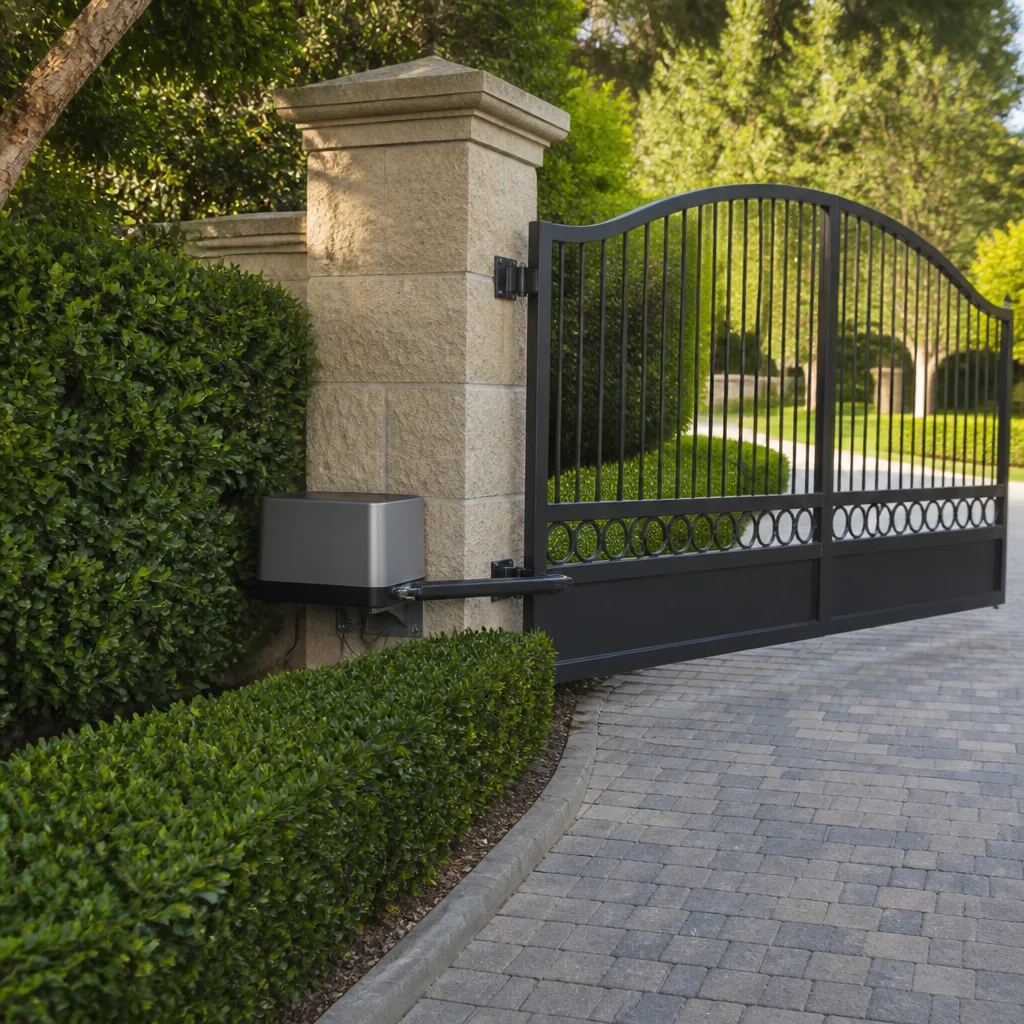
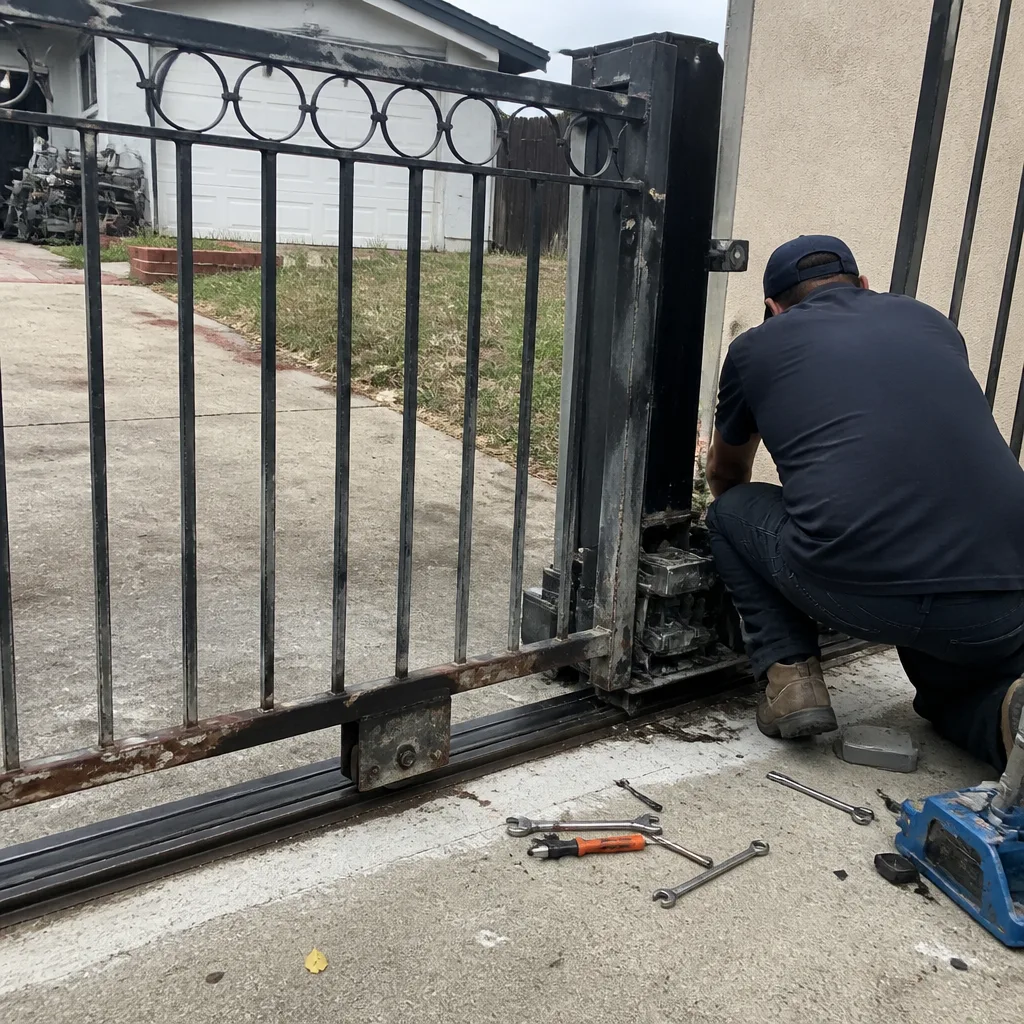 Before
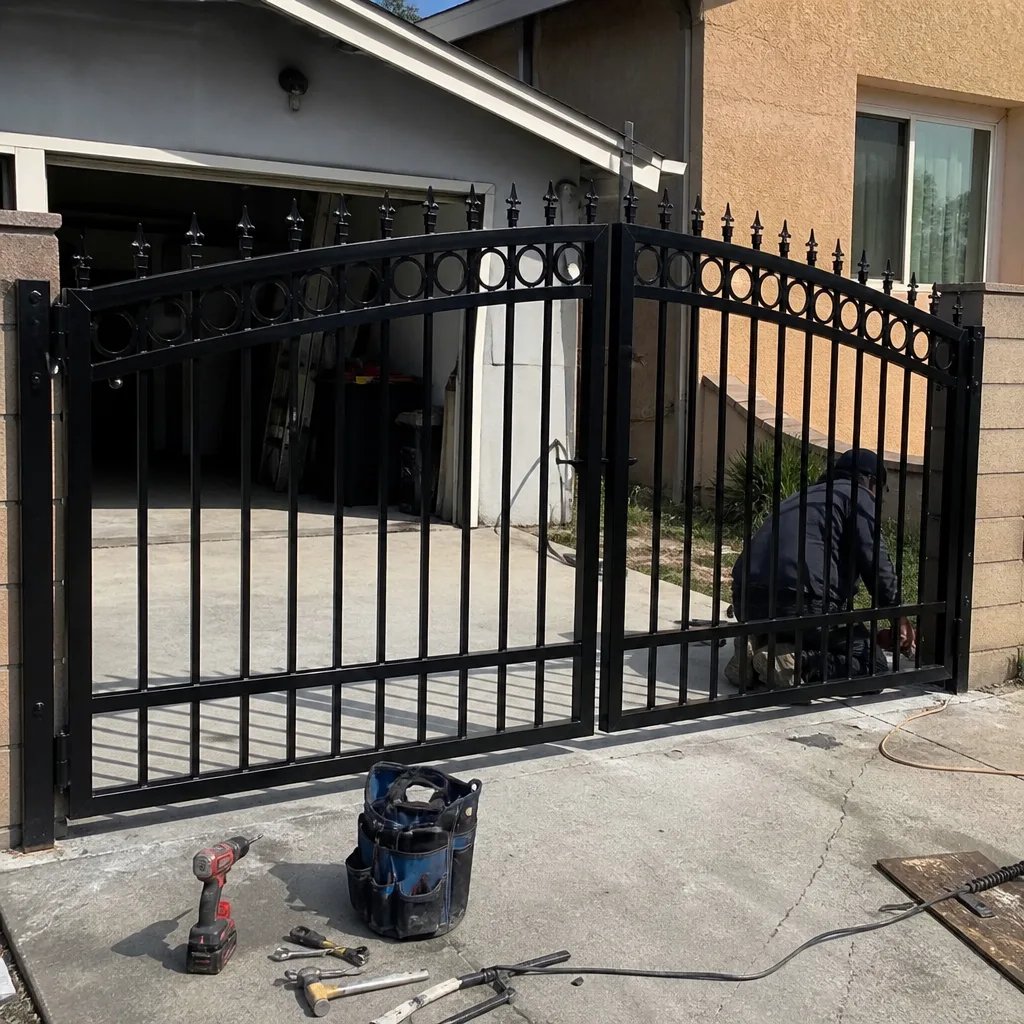 After
After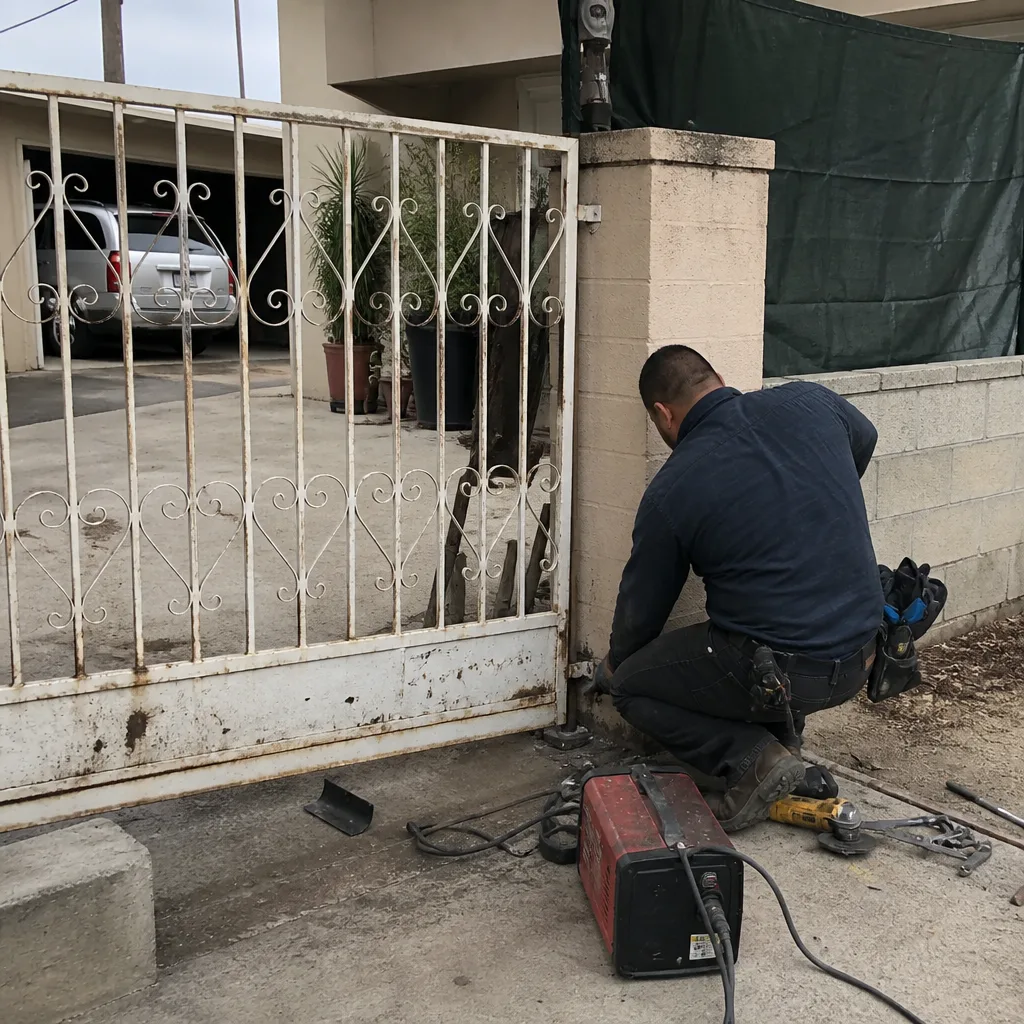 Before
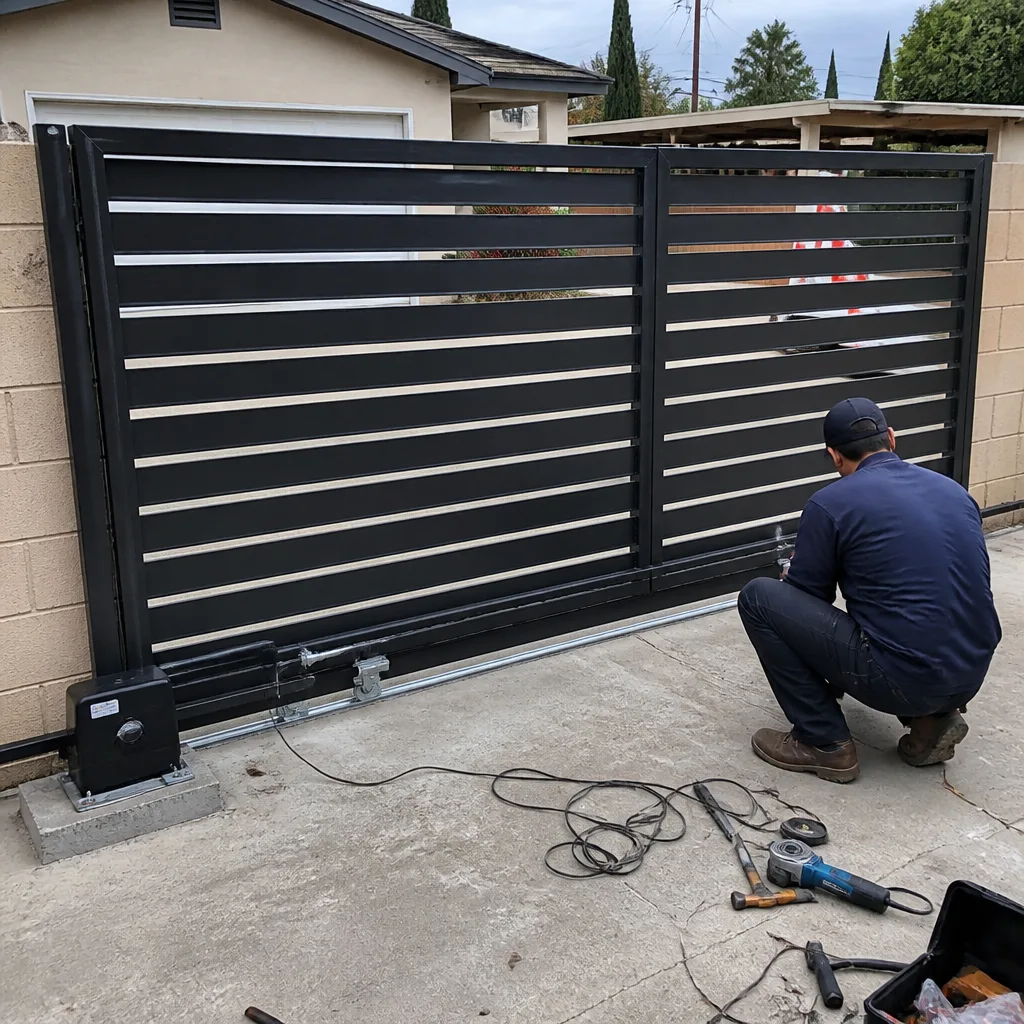 After
After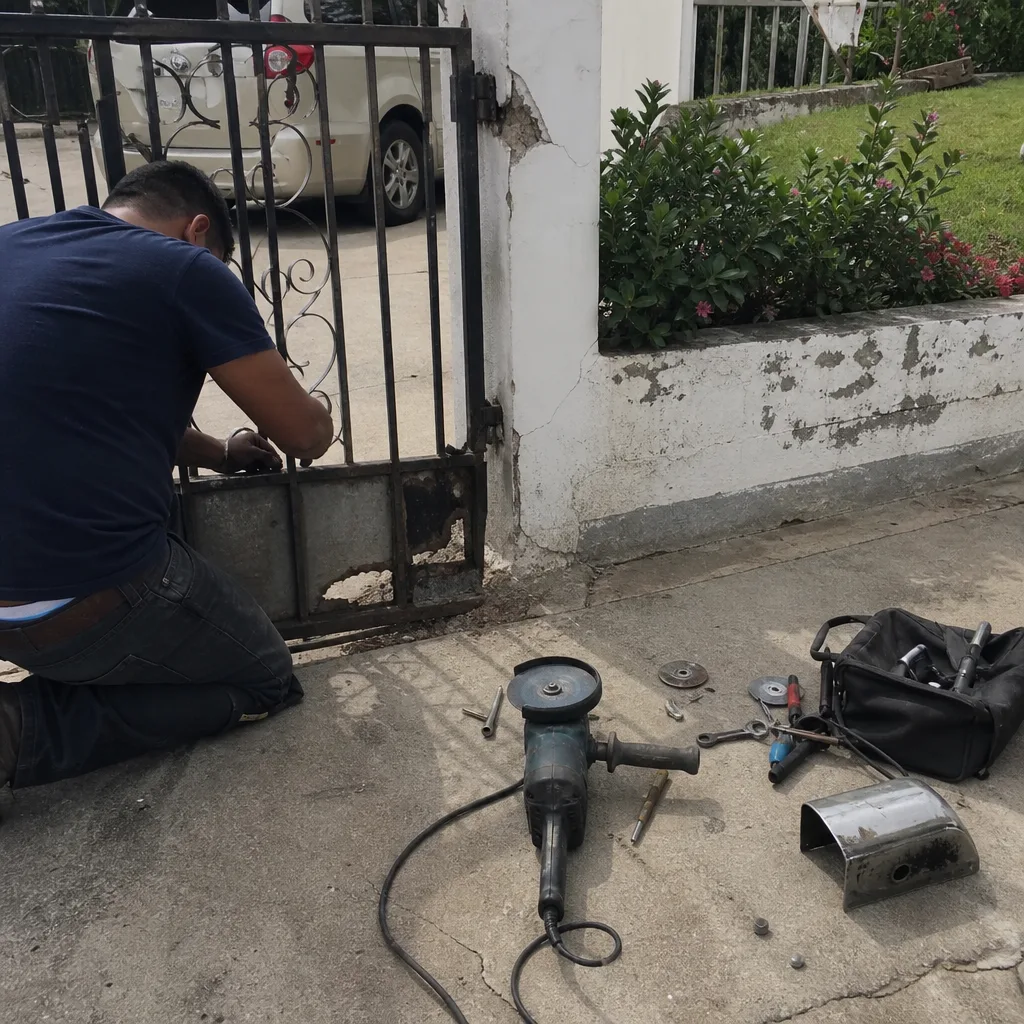 Before
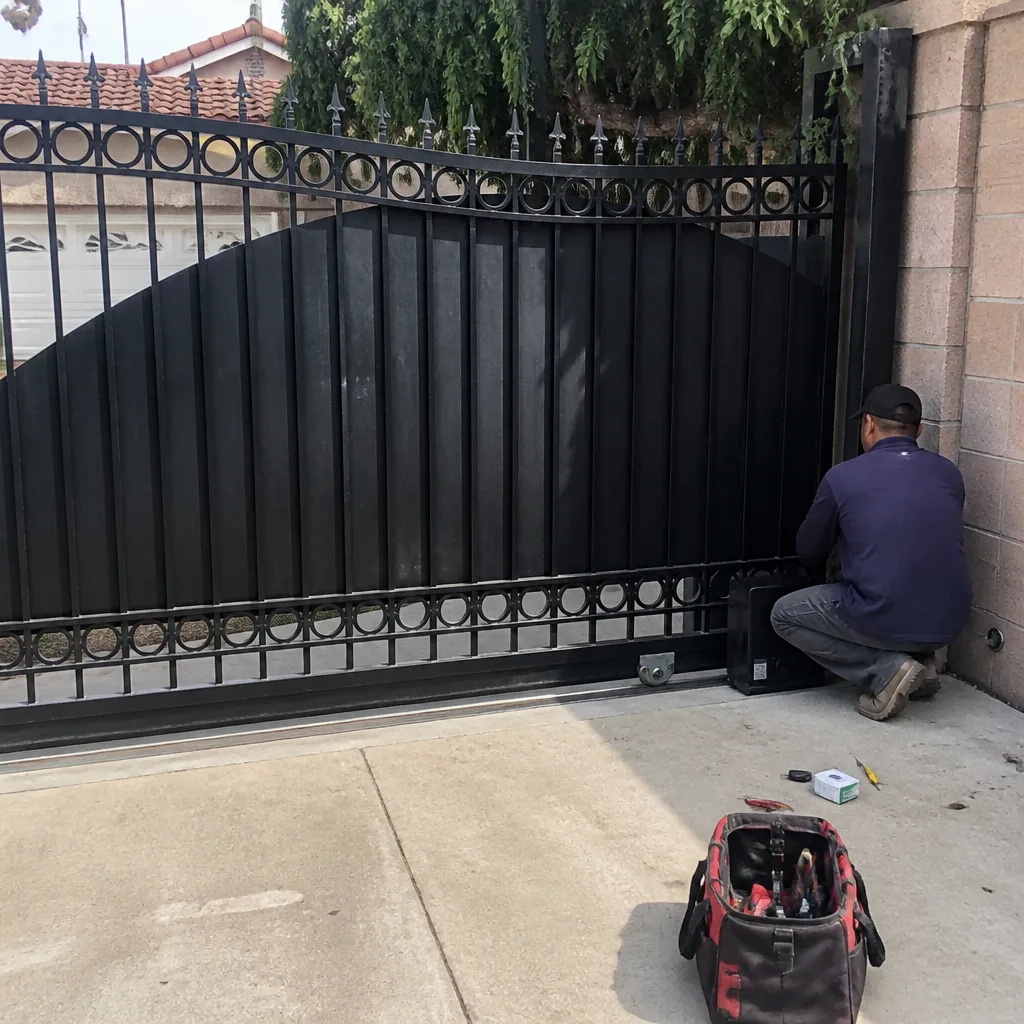 After
AfterGate Repair Permits, Codes & Inspections in CA: What You Need to Know
Here’s a number most California homeowners never hear until it’s too late: a gate that fails a code inspection after installation can cost more to bring into compliance than the original repair did. Not because the metalwork was bad, but because nobody checked the local setback requirements, the entrapment sensor rules, or the fire department access standards before the first post went in. In Bell Gardens, where lot lines run tight and many homes sit on streets that were platted before modern fire codes existed, the margin for error is smaller still. This guide covers what actually matters: which gate repairs trigger permits in California, which codes govern the work, what an inspector looks for, and how to avoid paying for the same job twice.
Quick Answer
Most minor gate repairs in California, like hinge replacement, welding a cracked frame, or adjusting a sagging leaf, do not require a permit. A permit is typically required when you replace or add an automatic gate opener, modify the gate’s structural posts or footings, or change the gate’s swing direction into a public right-of-way. Inspections focus on four things: entrapment protection for automatic gates, fire access clearance, structural anchoring, and setback compliance under local zoning rules.
Table of Contents
- When Does a Gate Repair Require a Permit in California?
- The California Codes That Govern Gate Work
- What an Inspector Actually Checks
- UL 325 and Entrapment Protection Rules
- Fire Access and Setback Rules
- How the Permit Process Works, Step by Step
- Bell Gardens Specific Considerations
- Common Mistakes to Avoid
- When to Call a Professional
- Frequently Asked Questions
When Does a Gate Repair Require a Permit in California?
California does not have a single statewide gate permit rule. The trigger depends on the local building authority, which in Bell Gardens means the Los Angeles County building code as adopted and amended by the city. But the underlying framework is consistent across the state because nearly every municipality uses the California Building Code (CBC) and the California Residential Code (CRC) as their baseline, with local amendments layered on top.
Here is the practical dividing line we use on every service call:
Work that typically does NOT require a permit:
- Replacing worn hinges, rollers, or gate hardware with like-for-like parts
- Welding a cracked weld or reinforcing a twisted frame without changing the gate’s footprint
- Replacing a failed gate opener motor with the same make and model on an existing compliant installation
- Replacing keypads, receivers, loop detectors, or photo-eye sensors on an existing system
- Adjusting gate travel, closing force, or limit switches
- Repainting, refinishing, or replacing decorative elements
Work that typically DOES require a permit:
- Installing a new automatic gate opener or automation system where none existed before
- Pouring new concrete footings or enlarging existing post foundations
- Replacing structural posts that anchor the gate to the ground
- Installing a new gate across a driveway where no gate previously stood
- Changing the gate’s swing so it opens into the public right-of-way instead of onto the property
- Converting a manual gate to an automatic gate
The “like-for-like” rule is where Bell Gardens homeowners get tripped up. Replacing a broken DoorKing opener with a new DoorKing opener of the same model often needs no permit because it’s a mechanical swap. But installing a different model that changes the gate’s travel speed, adds a different entrapment sensing method, or requires new electrical service is a modification, and the city treats it as new work. When we encounter a repair that crosses that line, we tell the homeowner on the spot, before any work begins.
The California Codes That Govern Gate Work
Understanding which code applies saves a lot of confusion at the permit counter, because different parts of your gate are governed by different books. A gate is simultaneously a structure, an electrical appliance, and a potential fire-access obstruction, and the code treats it as all three.
The California Building Code (CBC) and Residential Code (CRC)
The CBC and CRC govern the structural side of the gate: post depth and diameter, footing size, anchoring requirements, and the structural integrity of the swinging or sliding leaf. For most single-family homes in Bell Gardens, the residential code applies, and its gate provisions are surprisingly short. The relevant sections deal with foundation anchoring, wind resistance (important in the Santa Ana season when gusts hit 50 mph through the San Gabriel Valley), and the hardware required to keep a gate from being lifted off its track by an intruder or by wind.
What the structural code effectively demands is that the gate be anchored to concrete at a depth appropriate for the soil. In Bell Gardens, much of the residential soil is a sandy loam over a high water table because the city sits near the old Los Angeles River floodplain. That means a post set at 24 inches in dry desert soil might need to go deeper here, or the concrete footing may need to be wider. This is a real, observed difference we’ve encountered repeatedly, not a theoretical footnote.
UL 325 and the entrapment standard
UL 325 is the national safety standard for automatic gate operators, and California incorporates it by reference into both the electrical code and the building code. It is not optional. Any automatic gate operator installed, repaired, or modified in California must meet the current UL 325 requirements for entrapment protection. This standard dictates what type of sensing devices must be present, where they must be mounted, and the maximum closing force the gate may exert before it must reverse.
NFPA 101 and fire access
The National Fire Protection Association’s Life Safety Code, adopted in modified form by many California jurisdictions, addresses the minimum clear opening width for driveway gates and the requirement that gates across fire-access roads have an approved method for emergency access. On a residential driveway in Bell Gardens, this usually translates to a requirement that the gate not reduce the clear driveway width below the code minimum and that the gate’s opening mechanism not unreasonably delay fire apparatus access.
Local Bell Gardens amendments
Bell Gardens operates under Los Angeles County’s building code framework with its own municipal amendments. The practical effect for a homeowner is that what the county allows in an unincorporated pocket of East Los Angeles may not exactly match what Bell Gardens enforces on the same street. The differences are rarely dramatic for residential gate work, but they exist in setback calculations and in how the city handles accessory structure heights, which can affect a tall estate-style gate or a gate with an overhead arch.
What an Inspector Actually Checks
If your gate project required a permit, an inspector will come out at one or more points during the work. Here is what they actually look at when they walk up your driveway. We know this list because we stand on the sidewalk with them while they check it.
- Footing depth and concrete placement: Before the concrete pour, the inspector checks that the post holes are dug to the depth shown on the approved plans and that the rebar or anchor bolts are in place. In Bell Gardens soil, underdug footings are a common correction item.
- Post plumb and gate clearance: After the posts are set, the inspector checks that they are plumb and that the gate leaf clears the ground by the specified amount across its full travel arc. A gate that drags on a cracked driveway apron will be flagged.
- Entrapment protection devices: For automatic gates, the inspector verifies that photo-eye sensors are mounted at the manufacturer-specified height, that a reversing edge or other contact sensor is present on the closing edge, and that the gate reverses when the sensor is triggered. They will block the beam with a clipboard or a broom handle and watch for the reversal.
- Closing force test: The inspector places a force gauge between the closing gate edge and the gate post, then measures the force before reversal. The UL 325 limit is 40 pounds of contact force on the leading edge. A gate that exceeds this fails inspection on the spot.
- Setback and swing direction: The inspector verifies that the gate swings in the direction shown on the approved plans and that the gate, when open, does not encroach on the public sidewalk or street beyond what the permit allowed.
- Electrical work: If the project included a new circuit for the opener, the electrical work has its own inspection, often before the drywall or conduit is closed up, verifying proper gauge wire, grounding, and a dedicated circuit.
The inspection itself is not adversarial. Most residential gate inspections in Bell Gardens take under twenty minutes if the work was done correctly. But a failed inspection adds a corrective visit, a re-inspection fee, and days of delay, which is why we encourage homeowners to have the gate ready before the inspector arrives.
UL 325 and Entrapment Protection Rules
UL 325 matters more in California than in most other states because the state’s injury liability standards are strict, and because entrapment injuries are the single most common source of gate-related lawsuits nationwide. The rule has been updated twice in the last decade, and each update has tightened what counts as adequate protection.
Every automatic gate operator in California is classified by UL 325 into one of four use classes. Residential driveway gates fall under Class I. The standard then requires that every Class I operator be equipped with two independent forms of entrapment protection:
- A primary inherent reversing system: A force-sensing mechanism inside the operator that detects an obstruction and reverses the gate. This is built into every compliant opener from Ghost Controls, Elite, Mighty Mule, and the other major brands.
- A secondary external sensing device: Either a photo-eye sensor that spans the gate opening, a reversing edge strip mounted on the gate’s leading edge, or, on many newer installations, both.
The 2018 update to UL 325, which California adopted, added a requirement for monitored entrapment protection devices on new installations. “Monitored” means the device sends a continuous supervision signal to the control board, and if the device is removed, damaged, or disconnected, the control board detects the fault and holds the gate open until the fault is corrected. This sounds technical, but the practical effect is important for a homeowner: a monitored system will not let a gate operate in an unsafe condition, even if a sensor has failed or been bypassed.
For a repair situation, the UL 325 rule that matters most is this: you may not remove a safety device during a repair and leave the gate in service without it. A homeowner who unplugs a photo-eye because the gate “works better” without it has created a code violation and a real entrapment hazard. We will not do that on a job, and we advise homeowners not to do it themselves.
Fire Access and Setback Rules
The fire access rules for residential gates in California come primarily from NFPA 1141 and NFPA 1144, which set standards for fire department access in subdivisions and for the built environment around homes. The portions of these standards that reach a single-family driveway gate are narrow but non-negotiable.
The core requirement is that the driveway, including any gate opening, must provide a clear unobstructed width of at least 12 feet for fire apparatus on streets that require it, and a minimum clear width for residential driveways that varies by jurisdiction. In Bell Gardens, many driveways are on the narrower side because the housing stock predates modern two-car standards. A 10-foot driveway with a gate whose posts and hinges reduce the clear opening to 9 feet could fail the fire-access requirement, even though the gate itself is perfectly well built.
Setback rules address where the gate may sit relative to the property line and the public right-of-way. In California, a gate that opens outward across a public sidewalk raises immediate questions because it can strike a pedestrian. Most jurisdictions, Bell Gardens included, require that a gate opening across a sidewalk be set back from the walk far enough that a person standing on the sidewalk is never in the gate’s swing path. The standard setback is usually 18 to 24 inches from the property line, but in dense older neighborhoods, we sometimes see the city allow less when the gate swings inward and there is no sidewalk encroachment.
The other fire-access consideration is the gate’s lock. A fire department responding to a medical call at 2 a.m. must be able to force or bypass the gate quickly. Residential gates with electronic locks keyed to a specific opener are generally acceptable because the fire department carries a universal key and bolt cutter for this exact situation, but the gate must not be padlocked from the inside in a way that prevents firefighter access from the street without cutting through the structure. A padlocked chain around a driveway gate is a common homeowner mistake that creates a real fire-response delay.
How the Permit Process Works, Step by Step
If your gate project requires a permit, here is the sequence in Bell Gardens and in most Los Angeles County cities. The order matters because doing it out of order creates delays that are completely avoidable.
- Determine permit requirement: Call the Bell Gardens Building and Safety Division and describe the work in plain language, or have a gate contractor do it for you. Ask specifically: “Does a driveway gate opener replacement on an existing gate require a permit in this city?” If the answer is yes, proceed. If no, get the answer in writing or note the name of the person you spoke with.
- Prepare plans or a scope description: For most residential gate work, the city does not require stamped engineering drawings. A simple site plan showing the gate location, the swing direction, the post and footing details, and the opener specifications is usually enough. We prepare these as part of our installation service.
- Submit the permit application: File the application with the city, pay the fee, and wait for plan review. In Bell Gardens, residential gate permits are usually reviewed within one to two weeks, though this can stretch in the summer construction season.
- Schedule footing and post inspections: After the permit is issued, schedule the first inspection before you pour concrete. The inspector checks the hole depth, the form, and the anchor hardware. Pour concrete only after this inspection passes.
- Complete the gate and opener installation: Hang the gate, install the opener, wire the safety devices, and set the travel limits and closing force. Test everything.
- Schedule the final inspection: The final inspection covers the structural work, the entrapment protection, the electrical work, and the setback. If the gate passes, the permit is signed off and closed.
- Keep the sign-off: File the final inspection sign-off with your home records. If you sell the home, the buyer’s inspector will ask about the gate, and a closed permit is the cleanest answer.
The most common place this process stalls in Bell Gardens is between steps 4 and 5, when a homeowner skips the footing inspection because the concrete truck was already scheduled. Missing that inspection means either tearing out fresh concrete or filing for a retroactive inspection, which is more expensive and more invasive. We schedule our jobs around the city’s inspection windows specifically to avoid this.
Bell Gardens Specific Considerations
Bell Gardens has a few local characteristics that affect gate work in ways a generic California guide will not mention. Having worked on gates in this city for years, here is what actually shows up on the job.
Tight lot lines and shared driveways: Bell Gardens has a high concentration of homes built in the 1940s and 1950s on narrow lots, many of which have shared driveway easements or driveways that run within a few feet of the property line. A gate on a shared driveway requires the consent of both property owners and often a written easement acknowledgment before any work proceeds. The city will not issue a permit for a gate that obstructs a shared access point.
Santa Ana wind exposure: The wind events that come down through the San Gabriel Valley in the fall hit Bell Gardens with gusts that can reach 40 to 50 mph on exposed streets. A gate that is under-anchored or built with lightweight hardware will fail in one of these events. When we replace posts in Bell Gardens, we go deeper and wider than the code minimum because we have pulled too many shallow post stubs out of the ground after a windstorm.
Older electrical panels: Many Bell Gardens homes still have original 60-amp or 100-amp electrical panels, and new gate opener installations sometimes require a dedicated circuit that the panel struggles to accommodate. This can push a permit from a simple gate scope into a panel upgrade, which triggers its own permit and inspection. We flag this in the estimate stage so the homeowner is not surprised later.
Spanish-style gates and architectural review: A portion of Bell Gardens’ housing stock includes Spanish-style and mid-century homes with decorative gate elements. If a gate is visible from the street and the home is in a designated historic or architectural review district, the city may require design review before issuing a permit. This is rare for standard driveway gates but more common for prominent estate-style entries on the main streets.
Practical tip: Call the Bell Gardens Building and Safety Division before you buy a gate off the shelf. A gate that meets the structural code but violates a local setback or height rule will be denied at the permit counter, and the return shipping on a 400-pound gate is not something any homeowner wants to arrange twice.
Common Mistakes to Avoid
- Skipping the permit on an opener replacement that changed the gate’s operation: Homeowners often assume a “replacement” is a “repair” and skip the permit. When the new opener changes the gate’s speed, force characteristics, or safety device configuration, the city treats it as new work, and an unpermitted installation can complicate a future home sale.
- Buying an opener online and having a handyman install it: We see this in Bell Gardens regularly: a homeowner buys a cheap opener, a handyman wires it in, and six months later the photo-eye is failing, the force setting is cranked up, and the gate is unsafe. The operator brands we service, including DoorKing and Elite, publish installation requirements that many casual installers simply do not follow.
- Setting the closing force too high: This is the most dangerous mistake on an automatic gate. A gate set to “push through” a minor obstruction is a gate that will injure a child or a pet. UL 325 sets a hard 40-pound contact force limit, and a gate above that limit is not just a code violation, it is a serious hazard.
- Ignoring the sidewalk swing zone: In Bell Gardens, several of the older east-west streets have sidewalks immediately adjacent to the driveway edge. A gate that swings outward over the sidewalk without proper setback is a pedestrian hazard and a liability claim waiting.
- Burying electrical conduit before the inspection: Homeowners under time pressure sometimes dig a trench, lay the conduit, and backfill it the same day. The inspector needs to see the conduit depth and the wiring before it is covered. Backfilling early means reopening the trench.
- Using the wrong hinge style for a heavy gate: A heavy steel or iron gate hung on lightweight hinges sags within a year. The sag then drags the gate across the driveway apron, which damages the opener and the gate both. In Bell Gardens, where iron gates are common on Spanish-style homes, this is one of the most frequent repair calls we answer.
When to Call a Professional
Some gate work is a straightforward weekend project for a homeowner who is comfortable with tools. Replacing a keypad, swapping a photo-eye sensor, or lubricating hinges are all reasonably doable with basic care. But when the work involves the structural anchoring of the gate, the opener’s internal wiring and force settings, or any part of the entrapment protection system, a professional makes more sense, both for safety and for the eventual inspection.
Specifically, call a professional if your gate requires new footings or post replacement, if the opener needs replacement rather than simple part swapping, if the gate’s swing direction must change to meet a setback requirement, or if the gate failed a previous inspection and you need the corrections handled properly. Ironworks Gate Co. offers free estimates in Bell Gardens. Call (213) 497-0081 and we will walk the property, check the code questions against the current Bell Gardens requirements, and give you a written price before any work begins.
Frequently Asked Questions
If you are replacing a failed opener with the same make and model on an existing compliant installation, you generally do not need a permit. If the replacement changes the opener model, the entrapment protection configuration, or the electrical supply, a permit is typically required. Call (213) 497-0081 and we can tell you which category your job falls into, usually in one phone call.
Residential gate permit fees in Bell Gardens typically run in the low hundreds of dollars, depending on the scope of the electrical work included. The permit fee is a small line item compared with the cost of redoing unpermitted work. For an exact figure on your project, call the Bell Gardens Building and Safety Division directly or ask us to price it into the estimate.
If the city learns of unpermitted gate work, usually through a neighbor complaint or a property sale inspection, you may be asked to obtain a retroactive permit, expose the work for inspection, and pay double fees. In the worst case, the city can require removal of non-compliant work. The retroactive permit path is always more expensive than doing it correctly the first time.
No, a gate that swings outward over a public sidewalk creates a pedestrian strike hazard and will not pass inspection in Bell Gardens or anywhere else in Los Angeles County. The gate must be set back from the sidewalk edge far enough that the full swing arc stays entirely on the property.
UL 325 requires every residential automatic gate to have two independent entrapment protection systems: a primary inherent force-sensing reversing system and a secondary external device such as a photo-eye or reversing edge. Newer installations also require monitored devices that detect sensor failure. Call (213) 497-0081 for a safety check on an existing gate; we will test the force and the sensors on site.
Most gate opener manufacturers specify a dedicated circuit for the operator, and the electrical code requires proper grounding and conductor sizing for the run. On older Bell Gardens homes with limited panel capacity, this is often where the scope of a gate project expands, so we check the panel early in the estimate process.
In Bell Gardens, a straightforward residential gate permit is usually reviewed within one to two weeks. The inspections are scheduled at the rough stage (before concrete) and the final stage (after installation). The whole process typically adds two to four weeks to the project timeline when planned properly.
The Bottom Line
California gate permits live in a gray zone that confuses homeowners, and the rules in Bell Gardens add a local layer that generic advice misses. The short version: like-for-like repairs usually need no permit; new openers, new footings, and structural changes usually do. The codes that matter are the California Building Code for structure, UL 325 for entrapment protection, and local fire-access rules for clear width and swing direction. The inspection itself is straightforward when the work is done properly, but skipping a required inspection or a required permit always costs more than it saves. Ironworks Gate Co. has been answering these questions for Bell Gardens homeowners for years, and we are happy to check your specific situation at no charge.
Call (213) 497-0081 for a free estimate, and we will tell you exactly where your gate stands on permits, code, and inspection, before any work is scheduled.
Written by Victor Salinas, Owner at Ironworks Gate Co., serving Bell Gardens since 2013.